
 Image 1 of 1
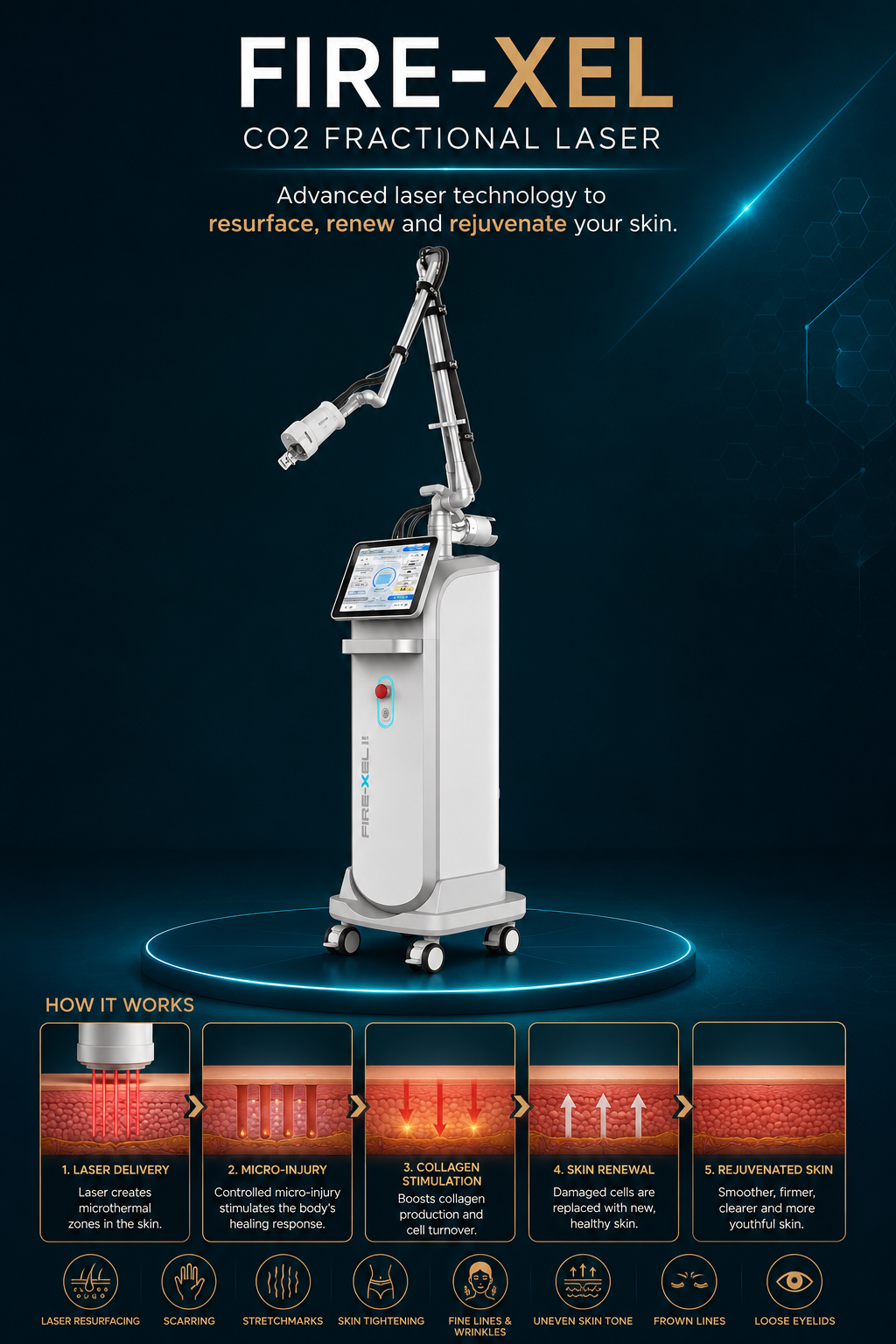
CO₂ fractional laser delivers thousands of microscopic columns of laser energy into the skin while leaving surrounding areas untreated.
These controlled treatment zones remove portions of damaged surface tissue and stimulate a healing response in deeper skin layers. As the skin repairs itself, new collagen formation can improve texture, scars, fine lines, enlarged pores and uneven pigmentation.
Because only a fraction of the skin is treated during each pass, healing is generally faster than with traditional fully ablative resurfacing, although meaningful downtime should still be expected.
CO₂ fractional laser is designed for clients seeking more intensive resurfacing than a light facial, peel or non-ablative treatment can provide.
It may help improve:
Acne scarring
Surgical scars
Fine lines and wrinkles
Sun-damaged skin
Enlarged pores
Uneven skin texture
Selected pigmentation
Stretch marks
A topical anaesthetic is normally applied before treatment. Clients may feel heat, stinging or burning during and shortly after the procedure.
CO₂ fractional laser has more downtime than most other treatments listed on this page. Depending on the treatment strength, clients may experience:
Redness
Swelling
Heat or tenderness
Bronzing
Crusting or peeling
Temporary sensitivity
Visible recovery commonly takes approximately 5–10 days, but deeper treatments may require longer. Redness can persist beyond the initial healing period.
Skin texture may begin improving once the surface has healed. Collagen remodelling continues over several months, so results develop gradually.
The number of sessions depends on scar depth, skin condition, laser settings and desired outcome. More intensive treatment may reduce the number of sessions but usually increases downtime.
Suitability must be assessed carefully. Darker skin tones can have a higher risk of post-inflammatory pigmentation, so treatment settings, preparation and aftercare are particularly important.
Clients are normally advised to avoid picking, active skincare ingredients, excessive heat and direct sun exposure during healing. Strict sun protection is essential.
CO₂ fractional laser delivers thousands of microscopic columns of laser energy into the skin while leaving surrounding areas untreated.
These controlled treatment zones remove portions of damaged surface tissue and stimulate a healing response in deeper skin layers. As the skin repairs itself, new collagen formation can improve texture, scars, fine lines, enlarged pores and uneven pigmentation.
Because only a fraction of the skin is treated during each pass, healing is generally faster than with traditional fully ablative resurfacing, although meaningful downtime should still be expected.
CO₂ fractional laser is designed for clients seeking more intensive resurfacing than a light facial, peel or non-ablative treatment can provide.
It may help improve:
Acne scarring
Surgical scars
Fine lines and wrinkles
Sun-damaged skin
Enlarged pores
Uneven skin texture
Selected pigmentation
Stretch marks
A topical anaesthetic is normally applied before treatment. Clients may feel heat, stinging or burning during and shortly after the procedure.
CO₂ fractional laser has more downtime than most other treatments listed on this page. Depending on the treatment strength, clients may experience:
Redness
Swelling
Heat or tenderness
Bronzing
Crusting or peeling
Temporary sensitivity
Visible recovery commonly takes approximately 5–10 days, but deeper treatments may require longer. Redness can persist beyond the initial healing period.
Skin texture may begin improving once the surface has healed. Collagen remodelling continues over several months, so results develop gradually.
The number of sessions depends on scar depth, skin condition, laser settings and desired outcome. More intensive treatment may reduce the number of sessions but usually increases downtime.
Suitability must be assessed carefully. Darker skin tones can have a higher risk of post-inflammatory pigmentation, so treatment settings, preparation and aftercare are particularly important.
Clients are normally advised to avoid picking, active skincare ingredients, excessive heat and direct sun exposure during healing. Strict sun protection is essential.